
When letters don’t line up the way the world expects...
A Parent’s Pause on Dyslexia...


In my work as a therapist, I often meet parents at a very tender moment…the moment they begin to wonder if something is different about the way their child learns.
I remember one mother who came in, her voice soft, almost apologetic:
“I think my child might have dyslexia… but I don’t want to label them. I don’t want them to feel broken.”
That word…broken…sits heavily in so many parents’ hearts. Because when a child struggles with letters, sentences, or schoolwork, the world can be quick to point out what’s wrong.
But in therapy, I’ve learned to pause and help families see the whole picture.
What Dyslexia Really Means
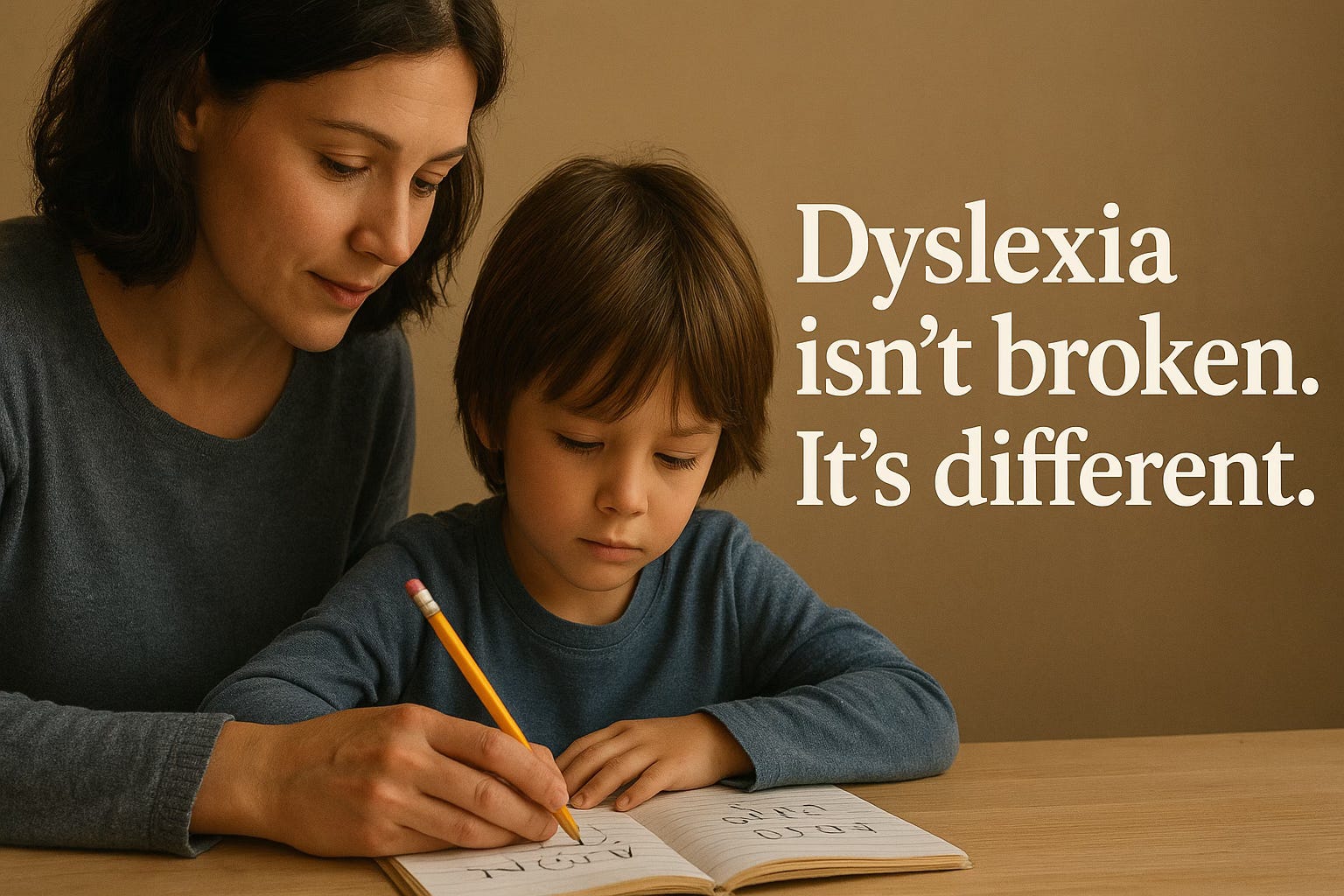
Dyslexia isn’t about laziness, lack of intelligence, or effort. It’s about the way the brain processes language. Children with dyslexia may see letters flip, words blur, or sounds refuse to line up neatly. Reading takes more time. Writing feels heavier.
But alongside these challenges, I also see gifts:
Strong visual thinking
Creative problem-solving
An ability to notice patterns others miss
Deep empathy, often from navigating struggle early in life
The Parent’s Journey
For parents, the journey often begins with frustration…homework battles, tears over spelling tests, endless questions like “Why can’t you just try harder?” Slowly, that frustration can turn into guilt, and then into worry about the future.
In therapy, I encourage parents to give themselves grace. Supporting a child with dyslexia is not about being a perfect teacher at home.
It’s about becoming a steady anchor. Celebrating small victories. Holding hope when your child feels defeated.
What Therapy Offers

In our sessions, we work on two parallel paths:
Practical tools…structured reading strategies, multisensory techniques, and ways to make learning less overwhelming.
Emotional support…helping children rebuild confidence, and helping parents reframe dyslexia not as a limitation but as one part of their child’s unique identity.
And sometimes, the most powerful shift is not in the child, but in the parent. I’ve seen parents move from fear to advocacy…from “What if my child can’t?” to “Look at what my child can do.”
A Gentle Reminder
If you’re reading this and walking this journey, pause for a moment. Dyslexia may change the path your child takes, but it doesn’t change the destination.
With the right support, children with dyslexia thrive…not in spite of their differences, but often because of them.
And as a parent, your willingness to understand, to learn, and to stay beside your child is one of the most powerful tools they will ever have.
That is such a timely revelation. I feel that parents (sometimes) and society make any mental illness more severe than it actually is by labeling and stigmatizing it. In fact it is just the path that changes and not the destination. Nature provides in other ways what it takes in some. Thanks for sharing your insights and affirmations.